


Recently, one of my clients was so overwhelmed with the news that it was hard for her to focus on work.
A few days later, I listened to a business call where people talked about how bad things already are—and how we need to brace ourselves for all the terrible things that are yet to come.
As I was listening to this call, I noticed the fear energy going around in this group. I felt the pull of it and realized how easy it would be to get sucked into feeling something similar.
The power of programming
What was going on in both these situations? These examples show the power of programming—how people can get programmed into feeling fear and overwhelm.
The news had created a state of overwhelm in my client.
The call I was on was full of programming energy, too.
Because here’s the thing: there are a gazillion of potential perspectives on the current situation. Almost all of them are trying to get people to see the world the way they do.
By the way, just like everything, this article has some programming energy in it as well. However, I’m being as clear, clean, and upfront about it as possible so you can choose if that’s something you want to engage with or not.
So, my not-so-hidden agenda is to:
share the truth, as I see it, which is that this excessive fear is neither necessary nor helpful,
help people who want to break out of unhelpful narratives and be more connected to their authentic wisdom. and
connect with my ideal clients — people who want to do work that matters to them.
Still with me? If so, let’s move on!
What is programming?
Programming is a set of beliefs and thoughts. Essentially, these are the building blocks of both our internal world, and the world we live in.
To give just one example: For a long time, culture programmed people to think that it was better to be right-handed. In some cultures, you would use your left hand for wiping your butt, and your right hand for eating.
But even in modern culture, we unconsciously see right-handedness as the way things are. For instance, most tools are designed for right-handed people. So, even when the programming isn’t deliberate, it still happens.
Programming exists on a spectrum—and it isn’t inherently bad.
Programming exists on a spectrum (from helpful to unhelpful). On the malevolent end, we have cult leaders and propagandists.
However, while programming can be toxic and dangerous, it’s not inherently bad. We wouldn’t be able to function in the world without it.
Take, for instance, little kids: I’m trying very hard to get my toddler to do certain things (share with others) and to not do certain things (run across the street). When a well-intentioned parent programs their child to help them function better in the world, that’s generally helpful.
When people try to get well-functioning adults to see the world a certain way, programming is less helpful.
Here’s why: adults generally have more context and discernment than small children.
That’s not the case when it comes to other adults making assumptions about how the world is or will be.
Of course, some people have more expertise in some areas. However, even world-leading experts generally only have superior knowledge in their chosen field which means there isn’t a single person who can give us a comprehensive view of what’s going on.
What’s actually happening in the world?
Clearly, it’s a moment of great change. That’s about the only thing everyone can agree on.
In my view, the most honest perspective at the moment is to acknowledge that the future is uncertain. Which has always been true, even when things were good.
It just might be even more true now.
We’re living through wildcard times that bring lots of uncertainty
My basic assumption is that we’re living through wildcard times.
During wildcard times, expectations and prognoses seem to be pretty useless. By definition, wildcards are about the unpredictable, the surprising, and the unexpected.
The assassination of Archduke Franz Ferdinand of Austria in 1914 was a wildcard moment. Today, we think of this event as the gunshot that started WW1.
But according to Europeana Newspaper—a project which makes historic newspapers searchable—contemporary European newspaper reports do “not reflect or foresee the gravity of the situation.”
And, honestly, I don’t blame them. Even with the benefit of hindsight, I still don’t get how “random aristocrat got killed by teenager” somehow led to a world war that killed 15-22 million people. It’s mind-boggling.
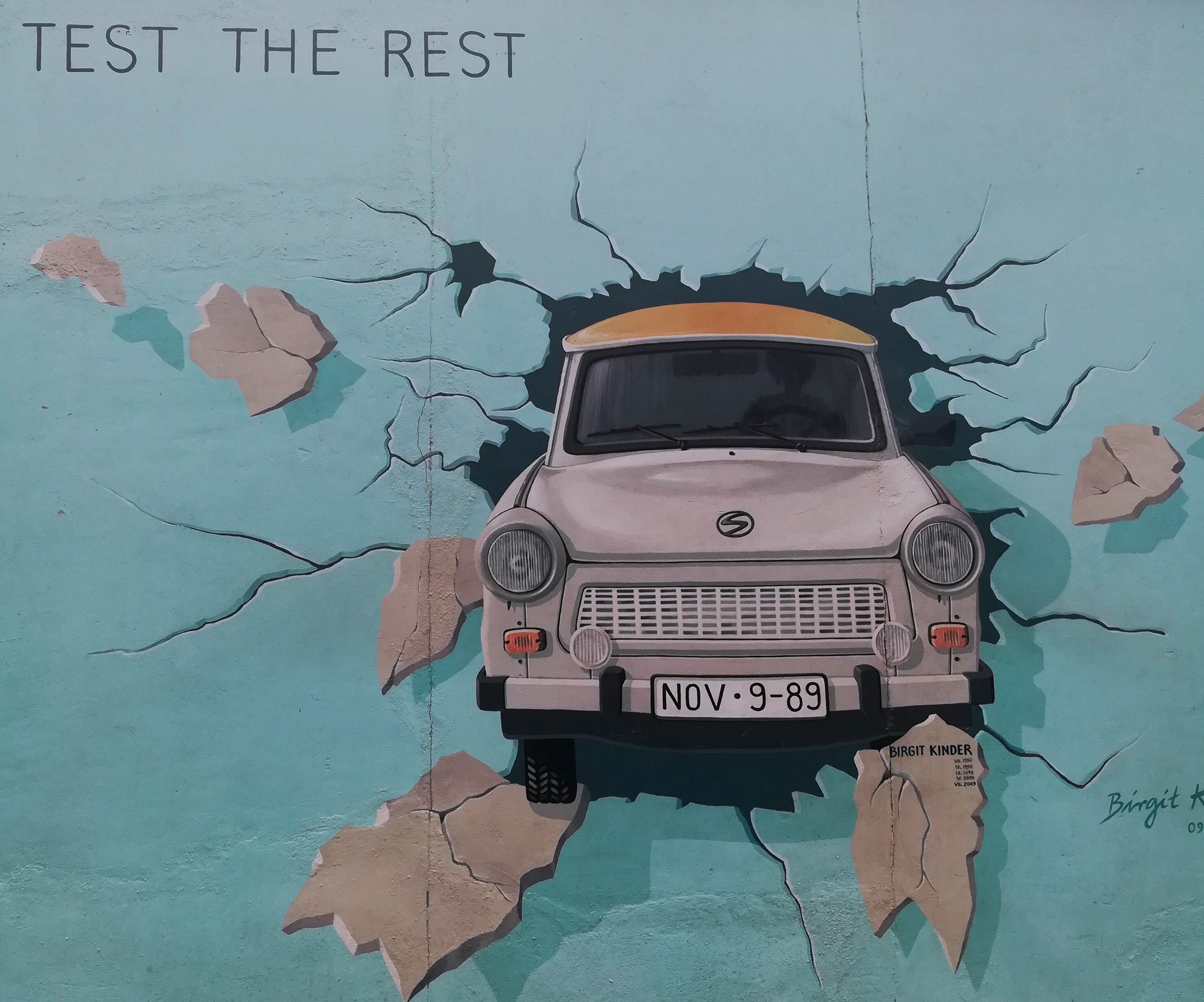
However, wildcard moments can have positive outcomes, too. Take, for instance, the fall of the Berlin Wall. Nobody could have expected the Berlin Wall to come down when it did because one person made a mistake during a press conference.
If my hunch is true and if we are living through wildcard times, many of the—optimistic and pessimistic—predictions we currently hear about won’t come to pass.
Why? If something is predictable, it’s not a wildcard. Predictions try to create certainty but wildcard moments are showing us the full extent of life’s uncertainty.
Why it’s so easy to feel overwhelmed right now, and what to do about it
I believe the collective sense of overwhelm right now boils down to three main reasons:
Doomsday scenarios provide relief from uncertainty (and a shot of drama)
The ego really doesn’t like the uncertainty of wildcard times. It prefers a certain doomsday scenario to an uncertain “it could go either way” situation. Thinking that a collapse is coming can provide relief from the not-knowing. It can also bring a sense of drama that can feel exciting. (Let’s be honest: many humans are addicted to drama.)Change gets interpreted as danger: Fear is designed to keep us safe from danger. And for most of human existence, change equaled danger. This is not necessarily the case anymore, but our nervous system hasn’t caught up to that yet.
Energetic resonance: Just like other energies, fear can spread from one person to the other, almost like a virus. Most people don’t have good energetic habits, which include clearing other people’s energies on a regular basis. This greatly reduces the amount of fear taken on from other people.
A process for reducing overwhelm:
Here’s a brief process that addresses some of the main reasons for overwhelm.
Acknowledge the current state of the world
Acknowledge that the world is in a state of uncertainty, and that you don’t know how things will be like in 10 years. Notice the parts of you that want certainty, that want to know for certain what will happen.Take an energetic shower
Imagine a golden waterfall of energy that’s coming down from above. (If you can’t imagine, that’s perfectly fine. Simply pretend it’s happening.) This energy is clearing away energies that aren’t yours and aren’t helpful.Reconnect with your own essence
Now imagine that the energetic shower is switching to rainbow colors. As this rainbow energy is coming down, it’s filling you up with your own unique essence and supportive energies.Notice that you always have certainty (in the present moment)
There’s one thing that’s always certain, and that’s the present moment. Notice your breath flowing in and out of your body. Your heart beating.
Make peace with the world’s uncertainty
See if you can find a certain amount of freedom in the loss of predictability what the world will be like in 10 years. You might like to sit with the words of the 18th-century German physicist and writer Georg Christoph Lichtenberg:“I cannot say whether things will get better if we change; what I can say is they must change if they are to get better.”
De-couple change from danger
Acknowledge that change isn’t the same things as danger. Things have been changing at a rapid pace for the last century, and humanity is still around.Closing
Tell yourself: “I’m now ready to be in the world. I can be in the world while staying connected with my internal sense of peace.”
Takeaway:
If you are feeling too overwhelmed by the world right to fully focus on your work, this might be due to programming.
The good news is that programming can be changed or removed. For instance, you can see uncertainty as something potentially positive, acknowledge that change isn’t the same things as danger, and clear external, fear-based energies from your energy field.
With my client who felt overwhelmed by the news, we spent most of our session removing unhelpful programming—at which point she felt better and clearer, more able to focus on moving forward in her life and her work.
What about the call I was on where people were discussing doomsday scenarios?
A decade ago, I would have walked away from that call in a fearful state. These days I thankfully know that I don’t have to let others program me into seeing the world a certain way. So, I simply rejected that narrative and went about my way.
Learning how to do this is crucial, especially in the turbulent times we live in.
Clearing unhelpful programming allows people to focus on what matters most to them.
You didn’t come here to be overwhelmed by the state of the world.
You came here for something else.
Let’s focus on that.
Want to move forward with doing work that matters?
Even in wildcard times, there are many things you can influence —for instance, your energy, your attention, and your work. If you want support with the work piece, I invite you to apply for a free Work Clarity & Alignment Call.
This call is for people who are in a work situation that — kinda, sorta, or totally — sucks and who want to do work they love and that matters to them.
It’s a chance to take a step back, evaluate your current situation, and explore your options — with someone who isn’t a friend or family member and who gets the nuances of work-related situations.
Or, if it’s not the right time for you to make an external change, I invite you to start with my free mini-meditation, the Purposeful Pause.
Mental health note: This article is meant to provide energetic and spiritual support. It’s not a substitute for professional mental health advice. If you’re dealing with mental health issues, please consult with a mental health professional.
AI disclosure: This article was written entirely by myself. I only used AI to get feedback on the completed draft, similar to asking a human reader for their opinion (“this part is a bit long”, “this part could use more detail.”). I then changed the draft based on this feedback.